Draft for review · highlighted items need confirmation from the office
2116 Capital Dr, Suite 100, Wilmington · Mon–Fri 8–5For doctors & schoolsRefer a patient

Home › Speech therapy

For babies, kids & teens

Pediatric speech therapy in Wilmington, NC

Speech therapy helps kids be understood, and understand others — finding words, saying them clearly, following what’s said to them, and using their mouth muscles to eat.

You don’t need a diagnosis to call.

In plain words

What speech therapy is

Speech therapy is about communication — being understood, and understanding other people. That’s more than saying sounds clearly. It covers finding the right words, following directions, taking a turn in a conversation, and using the muscles of the mouth to eat safely.

A session is one-on-one with a licensed speech therapist, and most of it looks like play. Books, games, toys, and back-and-forth turns, all set up so your child practices one skill at a time without it feeling like a test.

We’ve offered speech therapy here since 2016, alongside the occupational therapy we’ve provided since 2001. We see babies through teens — in our clinic, at your home, or at their childcare, preschool, or private school.

What we help with

Six areas we work on most

Most kids we see need help in one or two of these. After the evaluation, your therapist will tell you which ones, and why.

Talking and understanding

Late talkers, and kids who use fewer words than others their age. That’s called expressive language — getting your ideas out.

The other half is receptive language — taking ideas in. We help kids who have trouble following directions or answering questions.

Clear speech

Articulation is how sounds are made. We help kids whose words are hard to understand, even for family.

We also work with childhood apraxia of speech, where the brain has trouble telling the mouth how to move, and with stuttering — getting stuck on sounds or words, sometimes called fluency.

Getting along with others

Social communication is the unwritten part of talking: taking turns, staying on topic, reading faces, knowing when someone is joking.

We practice it in play with your child, so it’s useful on the playground and not just at a table.

Feeding and mouth skills

The same muscles used for talking are used for eating. We work on oral motor skills — how the lips, jaw, and tongue move to handle food.

For kids who refuse foods because of how they feel, smell, or look, we use sensory feeding approaches and go at your child’s pace.

Other ways to communicate

Some kids need another way to get their message across while their speech is coming along. That’s called AAC, short for augmentative and alternative communication.

It can be picture boards, sign language, or a speech device that talks for them. We help pick one and teach your family to use it.

Hearing loss

Kids who are deaf or hard of hearing can work with us on listening and talking. That work is called aural rehabilitation.

We work alongside your child’s audiologist — the specialist who tests hearing and manages hearing aids or implants.
Signs it might help

What parents notice first

None of these mean something is wrong. They’re just the things families tell us about when they call.

  • Your child is hard to understand, even for family who hear them daily.
  • They use fewer words than other kids their age, or aren’t talking yet.
  • Following simple directions is a struggle.
  • They get stuck on sounds or words, or repeat them.
  • Meals are hard — gagging, refusing, or eating only a handful of foods.
  • Joining other kids’ play or keeping a conversation going is hard.
  • Your child has hearing loss, or answers you only some of the time.

You don’t need a diagnosis to call.

Not sure if it’s worth a call?

Kids talk on their own timelines, and plenty of late talkers catch up on their own. We’re not going to tell you otherwise.

But you don’t have to sit with the question. Calling costs nothing, and an evaluation gives you a clear answer either way — including “your child is doing fine.”

See what the first call is like

Training

Programs and approaches we’re trained in

Our speech therapists have training in each of these. Which ones your child sees, if any, depends on what the evaluation shows.

DIR/Floortime

Therapy that starts on the floor with what your child is already interested in, and builds communication out of that play.

The Hanen Program

Coaching for parents, so the back-and-forth practice keeps going in everyday moments at home.

TEACCH

A structured, visual way of setting up tasks and routines, developed in North Carolina for autistic children.

Picture Exchange Communication (PECS)

A system where a child hands over a picture to ask for something, as a way to communicate without words.

Apraxia treatment programs

Programs built for childhood apraxia of speech, with lots of repeated practice of the mouth movements for each sound.

SOS Approach to Feeding

A step-by-step way to help picky and resistant eaters get comfortable with new foods.

Oral placement therapy

Hands-on exercises for the lips, jaw, and tongue, used to support speech sounds and feeding.

Sign language

Signs a child and family can use to communicate, on their own or alongside spoken words.

Where therapy happens

Wherever your child does best

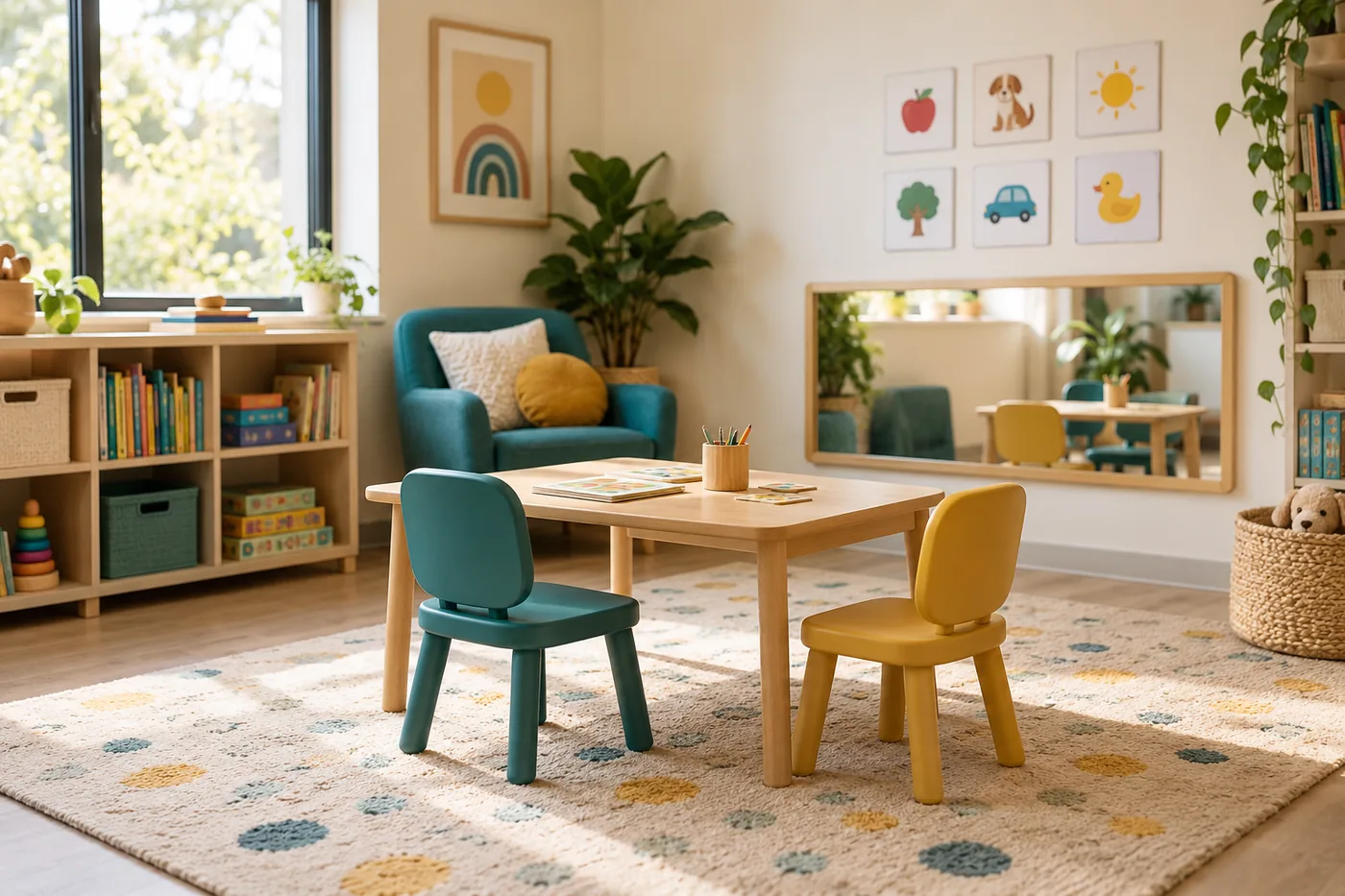
A speech therapy room with a low table, child-sized chairs, a wall mirror and picture cards
Illustrative

Our clinic

Quiet rooms on Capital Drive set up for listening and talking, with games, books, and mirrors for practicing sounds.

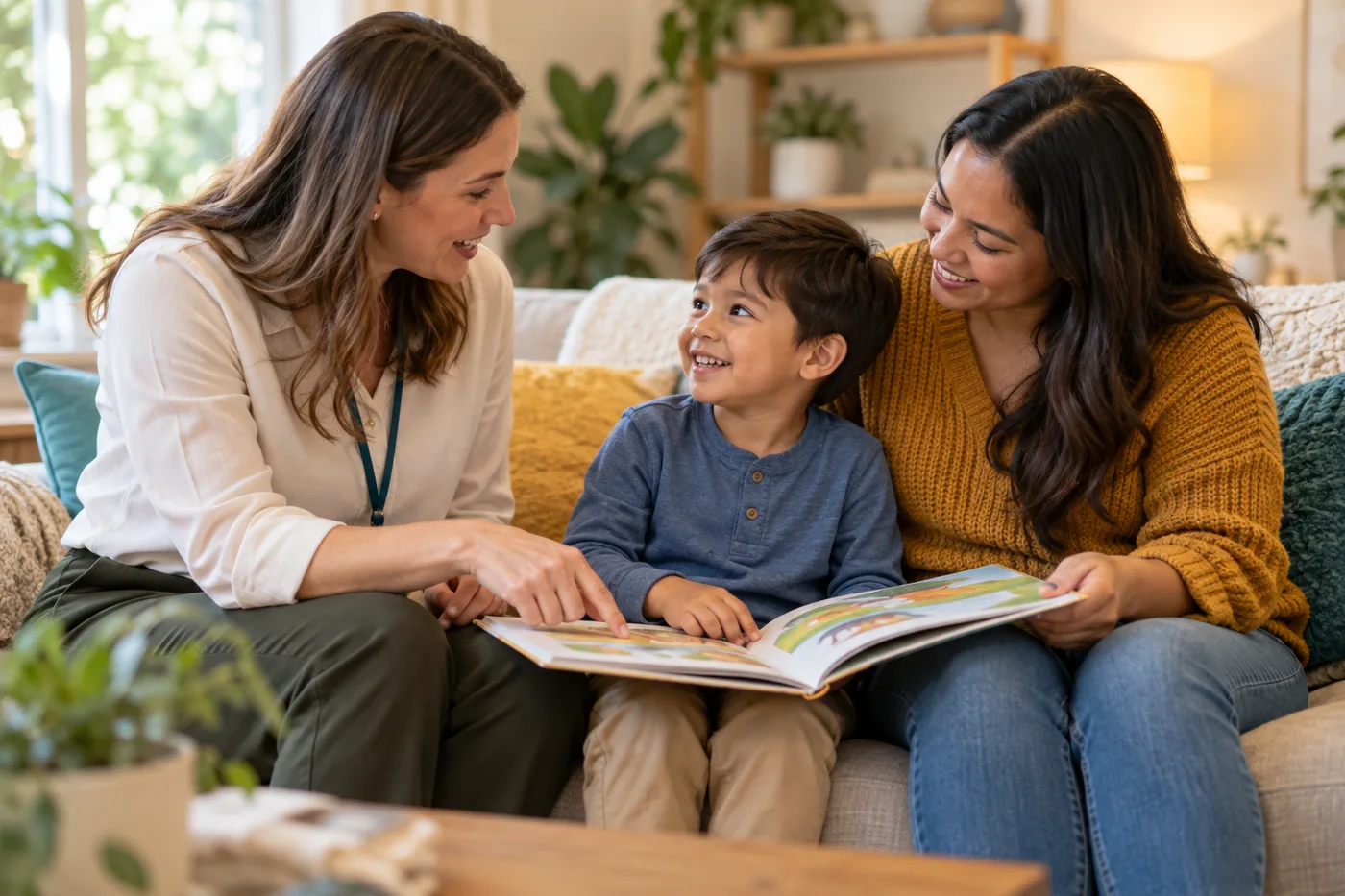
A speech therapist sharing a picture book with a child and parent on a living-room couch
Illustrative

Your home or childcare

Talking happens at snack time, bath time, and in the car. Working at home means you see exactly how to keep it going.

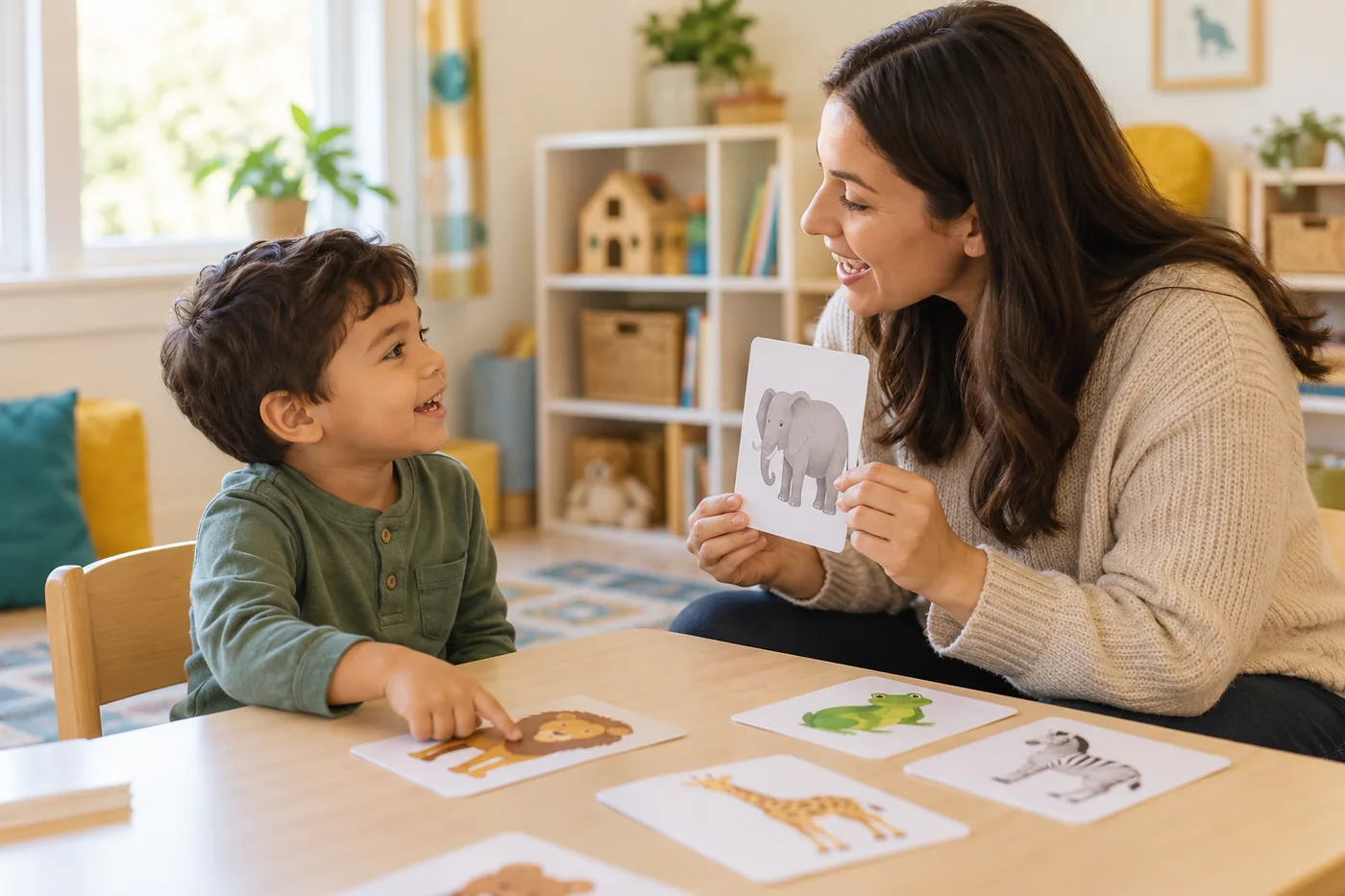
A speech therapist and preschool child using animal picture cards at a small table
Illustrative

Preschool and school

We work with children at preschools and private schools, where they can practice with the classmates they talk to every day.

Common questions

Questions parents ask us

How young is too young?

No age is too young. We work with babies, toddlers, kids, and teens. A baby doesn’t have to be talking yet for speech therapy to help — early work is often about feeding, sounds, and back-and-forth play.

My child is quiet. Should we wait and see?

You don’t have to wait to ask. Kids do talk on their own timelines, and plenty catch up. But a phone call costs nothing, and an evaluation gives you a clear picture instead of a worry.

Do we need a doctor’s order?

A doctor’s order is required for services billed through insurance. You don’t need one to call us, though — ring us first and we’ll tell you exactly what to ask your child’s doctor for. You don’t need a diagnosis either.

Will insurance cover it?

We accept most major insurance plans. Call and we'll verify your child's benefits before the first visit.

More about insurance and cost

How long does therapy take?

It depends on your child. After the evaluation, your therapist goes over what they found and how often they’d like to see your child. You’ll always know the plan, and we go back over it with you as your child changes.

Can my child get both speech therapy and OT?

Yes. Our speech therapists and occupational therapists work down the hall from each other and plan together, so you’re not sent across town for the second one. Read about occupational therapy.

Ready when you are

Tell us what you’ve noticed

Call 910-313-2111 and talk it through with a real person. You can ask a question without committing to anything, and we’ll check your insurance for you.

We accept most major insurance plans. Call and we'll verify your child's benefits before the first visit.

Looking for occupational therapy?Meet the therapists

Call 910-313-2111