Draft for review · highlighted items need confirmation from the office
2116 Capital Dr, Suite 100, Wilmington · Mon–Fri 8–5For doctors & schoolsRefer a patient

Home › Occupational therapy

For babies, kids & teens

Pediatric occupational therapy in Wilmington, NC

Occupational therapy builds the skills kids need for play, self-care, and learning — things like holding a pencil, staying calm, getting dressed, and eating a meal.

You don’t need a diagnosis to call.

In plain words

What occupational therapy is

Occupational therapy — OT for short — helps kids do the everyday things they need and want to do. For a child, those “jobs” are playing, eating, getting dressed, writing, and keeping up at school. When one of them is hard, OT works on the skills underneath it.

A session is one-on-one with a licensed occupational therapist, and most of it looks like play. Your child might swing, climb, dig through a bin of beans, or build something. Each activity is picked on purpose, for the skill they’re working on that day.

We’ve done this in Wilmington since 2001. We see babies through teens — in our clinic, at your home, or at their childcare, preschool, or private school.
What we help with

Four areas we work on most

Most kids we see need help in one or two of these. After the evaluation, your therapist will tell you which ones, and why.

Hands and movement

Small-muscle skills, like holding a pencil, using scissors, and managing buttons and zippers. Big-muscle skills, like running, climbing, throwing, and balancing.

We also help kids who seem clumsy, tire quickly, or whose handwriting is slow and hard to read.

Senses and self-regulation

Some kids take in sound, touch, and movement differently than other kids do. That’s called sensory processing. It can look like meltdowns over clothing tags, haircuts, noise, or messy hands — or a child who never seems to stop moving.

Self-regulation means noticing how your body feels and settling it down. We practice that with your child, and we show you what helps at home.

Eating

Very picky eating, gagging, trouble chewing, or a list of “safe” foods that keeps getting shorter.

We work on oral motor skills too — how the lips, jaw, and tongue move to handle food. We go at your child’s pace, and nobody is forced to eat anything in a session.

School and daily routines

Getting dressed, brushing teeth, packing a bag, and getting through a morning without a battle.

We also work on visual processing — how the brain makes sense of what the eyes see — and on keeping track of classwork.

Signs it might help

What parents notice first

None of these mean something is wrong. They’re just the things families tell us about when they call.

  • Buttons, zippers, scissors, or holding a pencil are a struggle.
  • Handwriting is messy or slow, or it wears your child out.
  • Noise, clothing tags, haircuts, or messy hands set off big reactions.
  • Your child seems clumsy, tires quickly, or avoids the playground.
  • Meals are hard — gagging, refusing, or eating only a handful of foods.
  • Calming down, focusing, or joining other kids’ play is a daily problem.
  • Getting dressed and out the door takes much longer than it used to.

You don’t need a diagnosis to call.

Why children are referred to us

Some kids already have a diagnosis when they come to us. Plenty don’t. We often work with children who have:

  • Autism
  • ADHD
  • Cerebral palsy
  • Down syndrome and other genetic conditions
  • A premature birth, or another high-risk start as an infant
  • Learning disorders
  • Sensory processing disorder
  • Muscular dystrophy
  • Neurological conditions — anything affecting the brain, spine, or nerves
  • Developmental delay — reaching milestones later than most kids their age
  • Torticollis and positioning needs — a tight neck muscle that keeps a baby’s head turned to one side

Training

Programs and approaches we’re trained in

Our occupational therapists have training in each of these. Which ones your child sees, if any, depends on what the evaluation shows.

SOS Approach to Feeding

A step-by-step way to help picky and resistant eaters get comfortable with new foods.

Therapeutic Listening

Music-based sessions, used alongside movement activities, for sensory and attention needs.

The Alert Program

Teaches kids to notice and change how “revved up” or sluggish they feel.

Astronaut Training

Balance, vision, and movement activities.

Interactive Metronome

A computer-based program for timing, attention, and motor planning — the planning your body does before it moves.

Beckman Oral Motor Protocol

Hands-on exercises for the lips, cheeks, jaw, and tongue, used for feeding and drooling.

Handwriting Without Tears

A handwriting curriculum. [now called Learning Without Tears — confirm which name to use]

Where therapy happens

Wherever your child does best

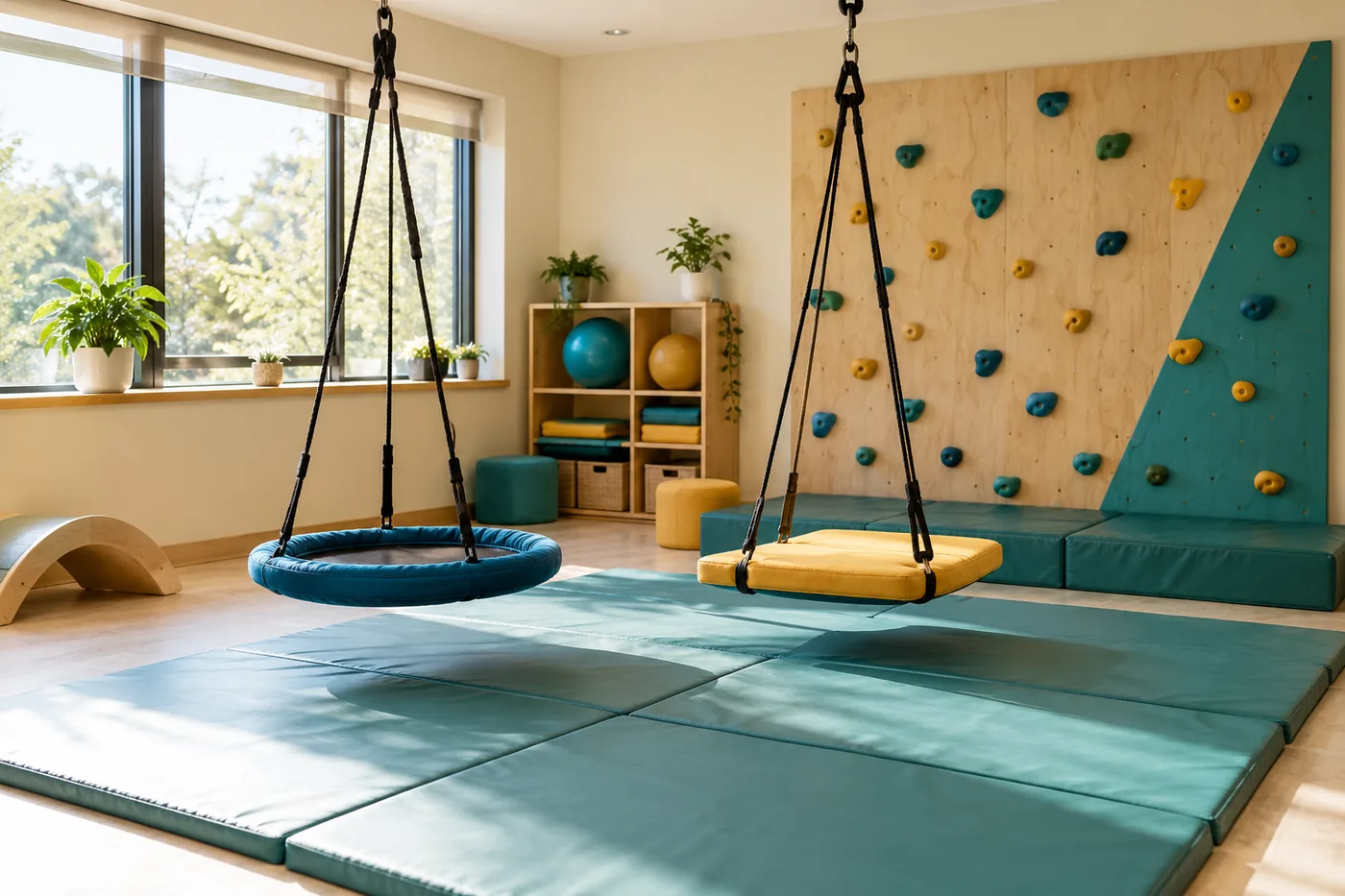
An occupational therapy gym with two low suspended swings, a small climbing wall and padded mats
Illustrative

Our clinic

A sensory gym with swings, climbing, and quiet rooms on Capital Drive, plus tables for handwriting and feeding work.

A therapist and young child practicing fastening buttons on a dressing board at home, a parent alongside
Illustrative

Your home or childcare

Dressing, mealtimes, and calming down are home problems. For babies and toddlers especially, it helps to work on them where they happen.

A therapist and preschool child making a paper collage at a craft table
Illustrative

Preschool and school

We work with children at preschools and private schools, so therapy fits into the school day instead of adding one more trip.

Common questions

Questions parents ask us

How young is too young?

No age is too young. We work with babies, toddlers, kids, and teens. With a baby or toddler, therapy usually looks like play on the floor — often at home, with you right there.

Do we need a doctor’s order?

A doctor’s order is required for services billed through insurance. You don’t need one to call us, though — ring us first and we’ll tell you exactly what to ask your child’s doctor for. You don’t need a diagnosis either.

Will insurance cover it?

We accept most major insurance plans. Call and we'll verify your child's benefits before the first visit.

More about insurance and cost

How long does therapy take?

It depends on your child. After the evaluation, your therapist goes over what they found and how often they’d like to see your child. You’ll always know the plan, and we go back over it with you as your child changes.

Can my child get both OT and speech therapy?

Yes. Our occupational therapists and speech therapists work down the hall from each other and plan together, so you’re not sent across town for the second one. Read about speech therapy.

Where do sessions happen?

In our clinic on Capital Drive, at your home, or at your child’s childcare, preschool, or private school. We pick the place where your child does best.

Ready when you are

Tell us what you’ve noticed

Call 910-313-2111 and talk it through with a real person. You can ask a question without committing to anything, and we’ll check your insurance for you.

We accept most major insurance plans. Call and we'll verify your child's benefits before the first visit.

Looking for speech therapy?Meet the therapists

Call 910-313-2111